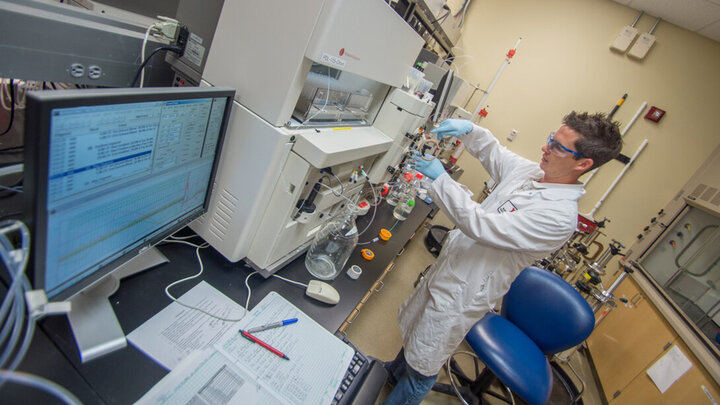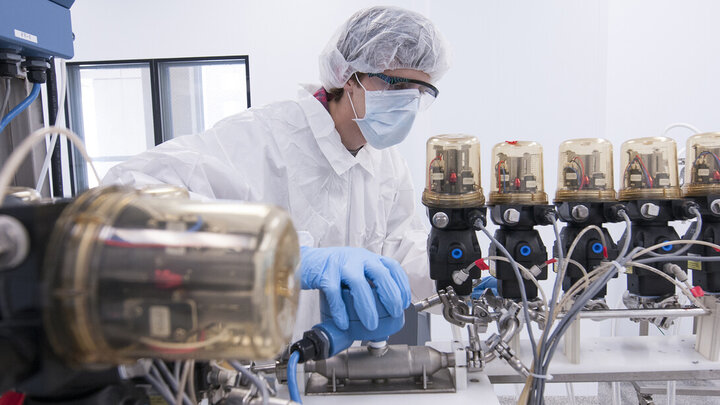
cientists in the College of Engineering’s Biological Process Development Facility have successfully produced a drug compound with potential to block HIV transmission in women.
The compound features the 5P12-Rantes molecule, discovered by scientists at the Mintaka Foundation in Switzerland to block HIV transmission by preventing the virus from attaching to human cells. Mintaka has contracted with the UNL facility to develop the manufacturing method for the compound.
The UNL facility has delivered its first batch of the compound to the non-profit research organization for formulation as a vaginal cream for use in clinical trials in South America. The facility landed the $3.8 million contract in 2010 from Mintaka to develop this biological production process for the microbicide.
The successful production run also confirms that the manufacturing process developed at the BPDF is ready to be transferred to a large-scale manufacturing facility, said Scott Johnson, good manufacturing practices coordinator for the UNL facility.